The council
What they knew, and when
The bridge's condition is recorded in the council's own inspections. The record moves from “Warning” to “Significant Damage” in seven months, and then nothing was done for the ninety-three days that followed.
| Date | The record |
|---|---|
| 20 June 2024 | Overall rating “Warning.” Parapets rated “Good”; abutments/piers and vegetation “Warning”; no comments recorded, no work follows. |
| 21 Jan 2025 | “Significant Damage.” Capping of the downstream wall partly removed; four areas of missing stonework upstream, two downstream. |
| 7 Feb 2025 | Speed limit cut from 80 to 60kph. |
| 24 Apr 2025 | Bronagh English died at the bridge. |
Ninety-three days passed between the “Significant Damage” rating and her death, with the defect unrepaired.
The council’s own rules for a wall like this
The council does not inspect its bridges informally. It uses the Department of Transport’s Bridge Asset Management System for Regional and Local Roads (2019). Under that system’s maintenance-inspection rating guide (Table 4.2), a parapet that is “part or all… missing, collapsed or significantly displaced” is rated RED — defined, in the guidance’s own words, as “significant damage that represents a safety hazard,” a “Dangerous Bridge.”
This is the point that matters, and it is often missed. The bridge’s overall rating was CR3 — “repair… within the next financial year.” But that overall repair timeline is not the test for the parapet. The parapet has its own, separate test — and this one was failed on the day.
The council’s engineer’s own words for the parapet on 21 January 2025 were: “a 5m long length of wall has collapsed” and “the capping of the downstream wall has been partly removed,” with four areas of missing stonework upstream and two downstream. Set that against the council’s own maintenance-inspection RED criterion for a parapet — “part or all… missing, collapsed or significantly displaced” — and it is a match, word for word. By the council’s own rules this parapet was RED: “significant damage that represents a safety hazard,” a “Dangerous Bridge.”
A collapsed parapet rated RED is a hazard on the day it is found — a missing wall on an open road — not a repair to be scheduled for a future budget year. The council’s own manual makes that distinction itself. Under its “Dangerous Bridges” procedure, where a bridge is “an immediate risk to public safety… it is essential that each Local Authority has a procedure in place”; the inspector reports to the Municipal District (MD) Engineer, whose response is to “check the structure in person… and determine if any immediate temporary measures to make the road safe, such as signing and guarding, are required.”
The same report records “Is Signage Present? No.” The family’s position is that a five-metre collapsed, unsigned parapet on an open road is plainly the “immediate risk to public safety” that procedure exists for — and that the response the manual sets out, signing and guarding by the MD Engineer, was not carried out. None of those measures — no sign, no barrier, no reduced limit, no closure — is recorded in the ninety-three days that followed. The inspection was commissioned and paid for by the council; the hazard it found was the council’s own knowledge to act on.
Whose job it was to act
Bridge inspections like this are not occasional or informal. They are carried out under the national bridge management system — Eirspan and the Department of Transport’s Bridge Asset Management System for Regional and Local Roads — which exists precisely so that a road authority holds a live record of every bridge’s condition and acts on it. Under that system, responsibility for holding those inspection reports and acting on their condition ratings rests with the road authority’s engineering function, headed in this district by the District Engineer. At the relevant time the District Engineer for the Tipperary–Cahir–Cashel Municipal District was James Swords, named as District Engineer in the council’s own signed minutes.
So the January 2025 “Significant Damage” report was not information that sat outside the council. It was commissioned and paid for by the council, produced under a national system whose whole purpose is to put a bridge like this in front of the responsible engineer — and its finding was a RED-category collapsed parapet with no signage. The manual’s own “Dangerous Bridges” procedure puts the next step with the MD Engineer — to check the structure in person and determine whether immediate temporary measures “to make the road safe, such as signing and guarding, are required.” In the ninety-three days that followed, the record shows no sign, no barrier, no reduced limit and no closure.
The family’s question is put plainly, to the office responsible: under a national system built to surface exactly this, how was a bridge the council’s own engineer had rated significantly damaged left open and unmarked on the road until Bronagh died there — and what was done, by anyone, with a report the council had asked for and paid for? That question is one for the proper legal process to answer; this page does not decide it.
How other councils respond to a wall like this →
The District Engineer is named as James Swords in the Tipperary–Cahir–Cashel Municipal District signed minutes (e.g. 26 May 2025, 25 May 2026). The national inspection framework is Eirspan / the Department of Transport Bridge Asset Management System for Regional and Local Roads. This section states the responsible role and the documented absence of action; it makes no finding that any individual caused the collision — that is a matter for the proper legal process. Categories and quoted phrases: Department of Transport Bridge Asset Management System for Regional and Local Roads (2019), maintenance-inspection parapet criteria and the dangerous-structures signing-and-guarding procedure, published on roadguidelines.ie. The overall bridge rating of 21 January 2025 is separately recorded as CR3 “Significant Damage.” This page sets out the council’s own dated records and published guidance. It does not determine the cause of the collision or legal liability; the reading of the guidance stated as the family’s is their position.
The wall where the car left the road
The council’s engineering inspection of 21 January 2025 recorded the parapet capping “partly removed” and a five-metre length “collapsed.” These are the family’s photographs of that wall at the exact point the car left the road — the capping gone, the stonework reduced to rubble, the River Aherlow directly beyond.
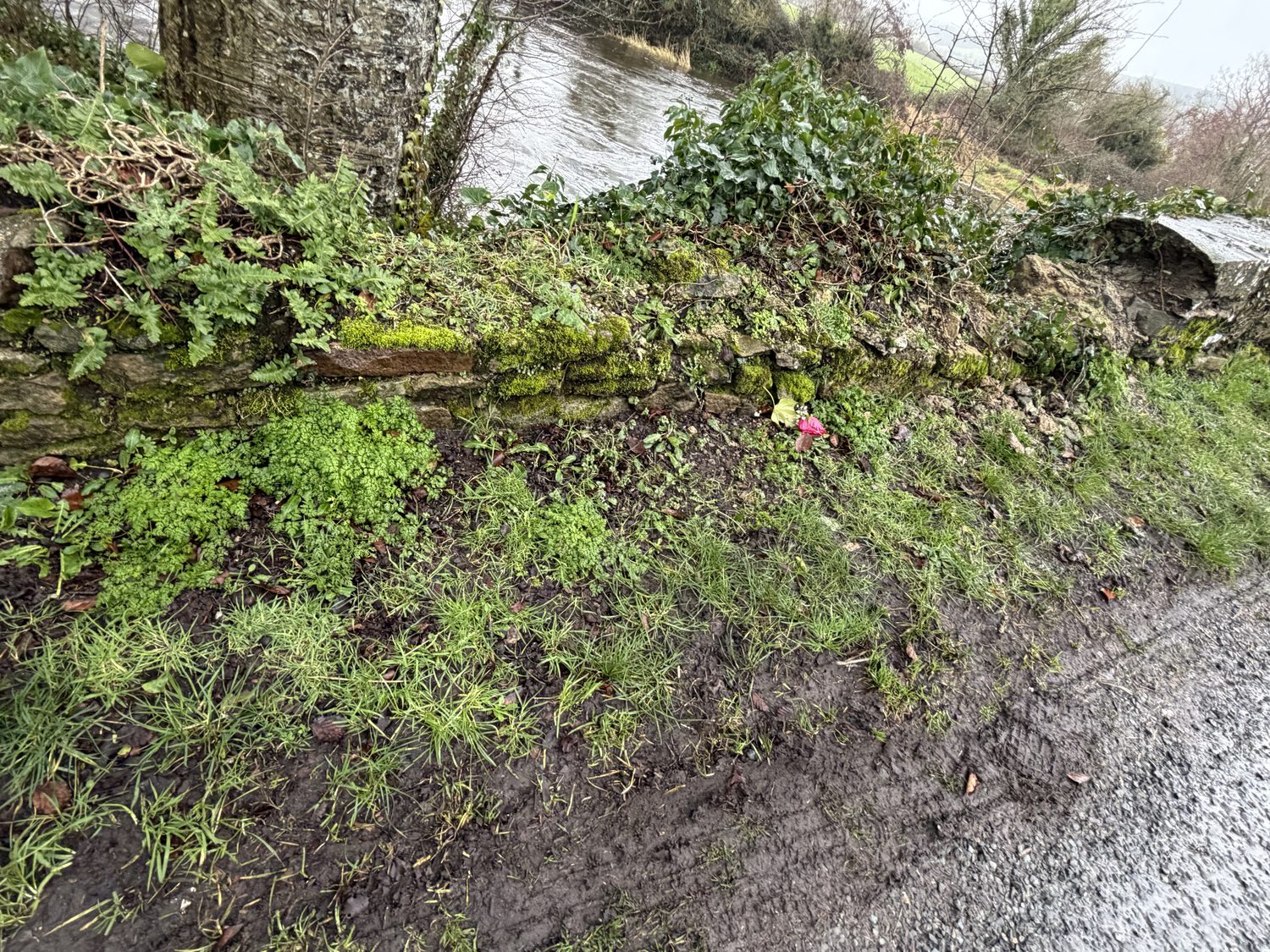
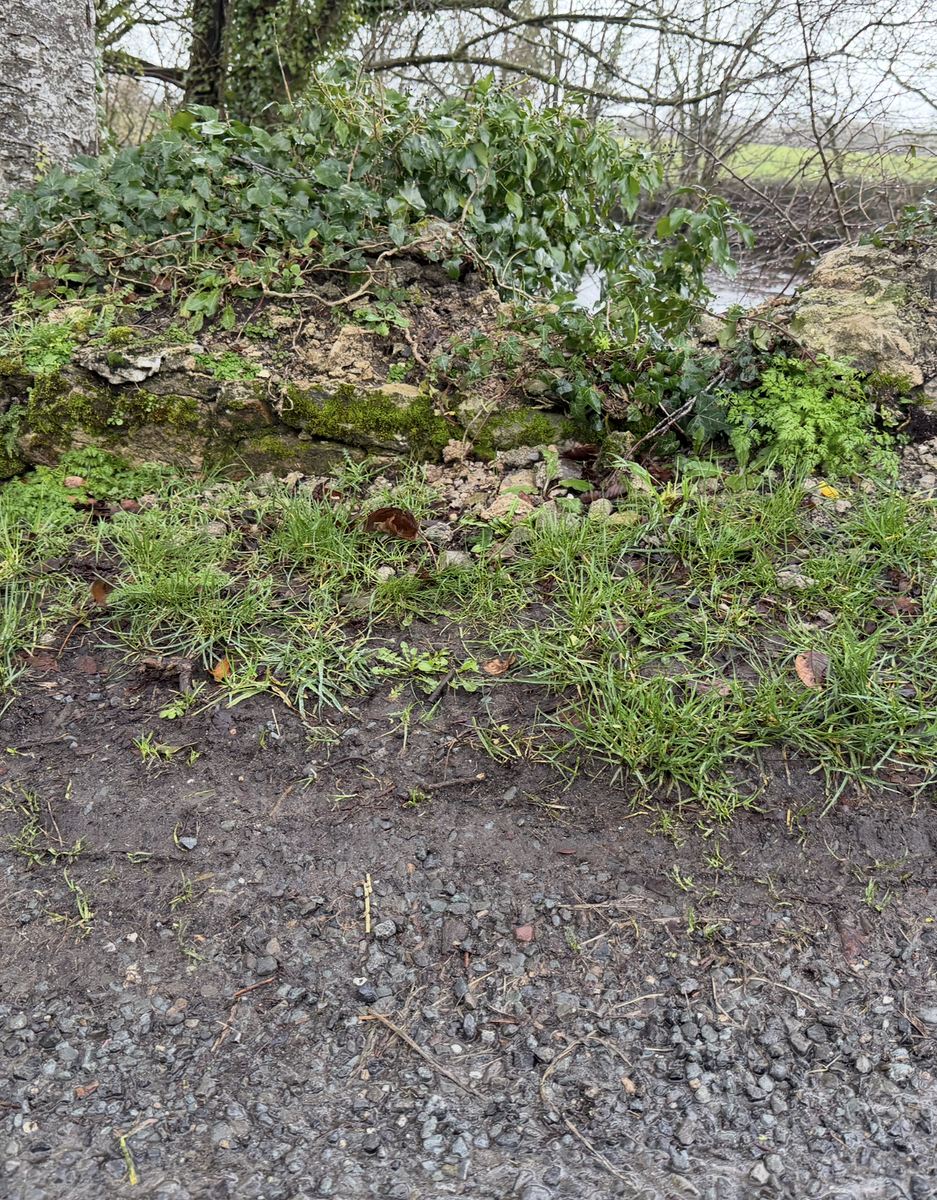
Source: TCC inspection ref TY-L3151-B-010 (PMS extract generated 01/09/2025); TCC inspection 21 Jan 2025; speed limit change 7 Feb 2025.
Video explainers — silent, captioned, with transcripts
Last updated 2026-09-11. This is a living record — findings are added as dated entries and prior versions remain visible.
From the Blog
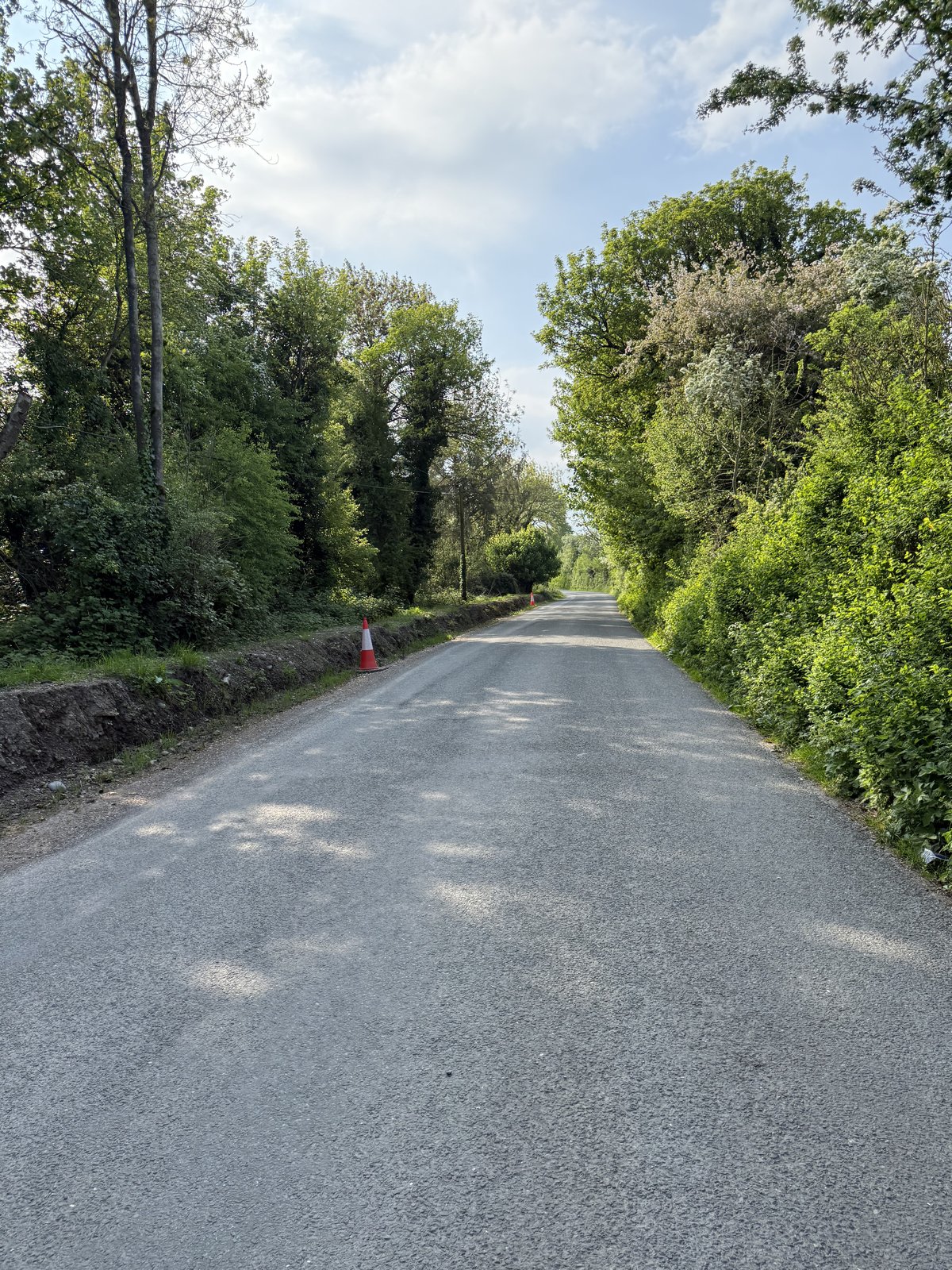
Roadworks, the bank and the open-drain question
Article
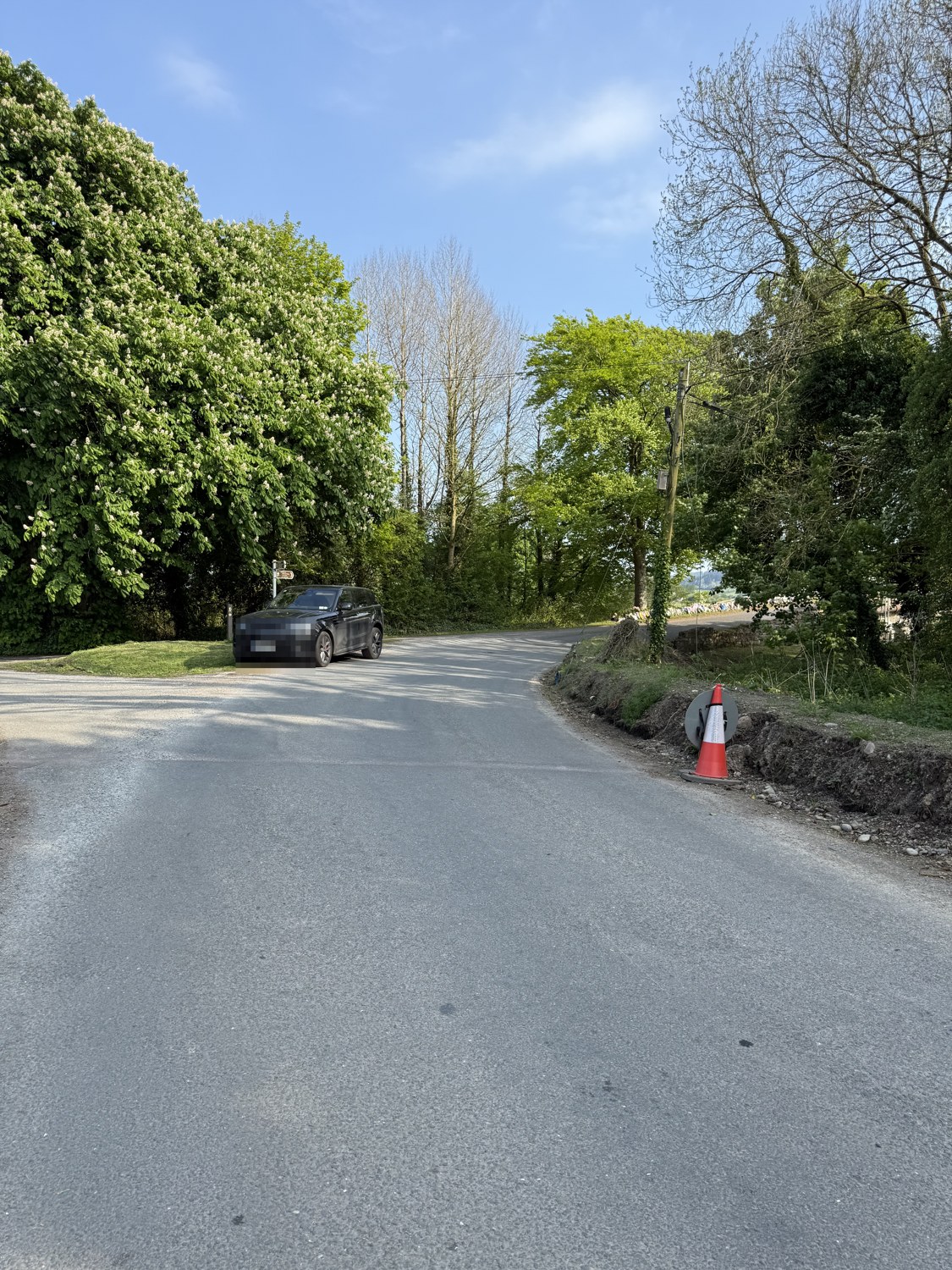
The bend, the warnings and the bridge wall
Article
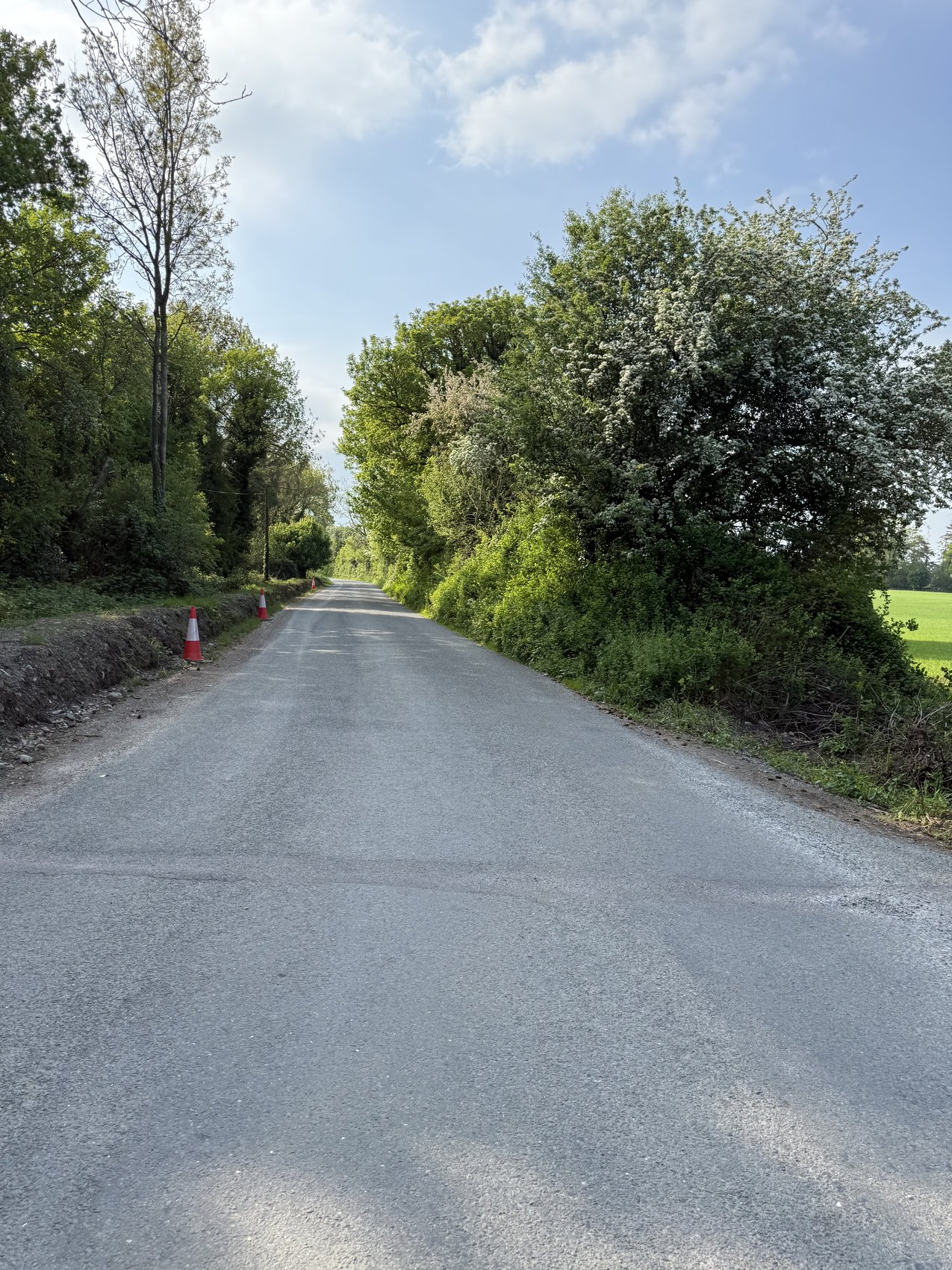
2023: Tipperary’s highest county death count
Article
The 80-to-60 motion: what the council requested
Article
Cahir–Cashel: questions, requests and decisions
Article
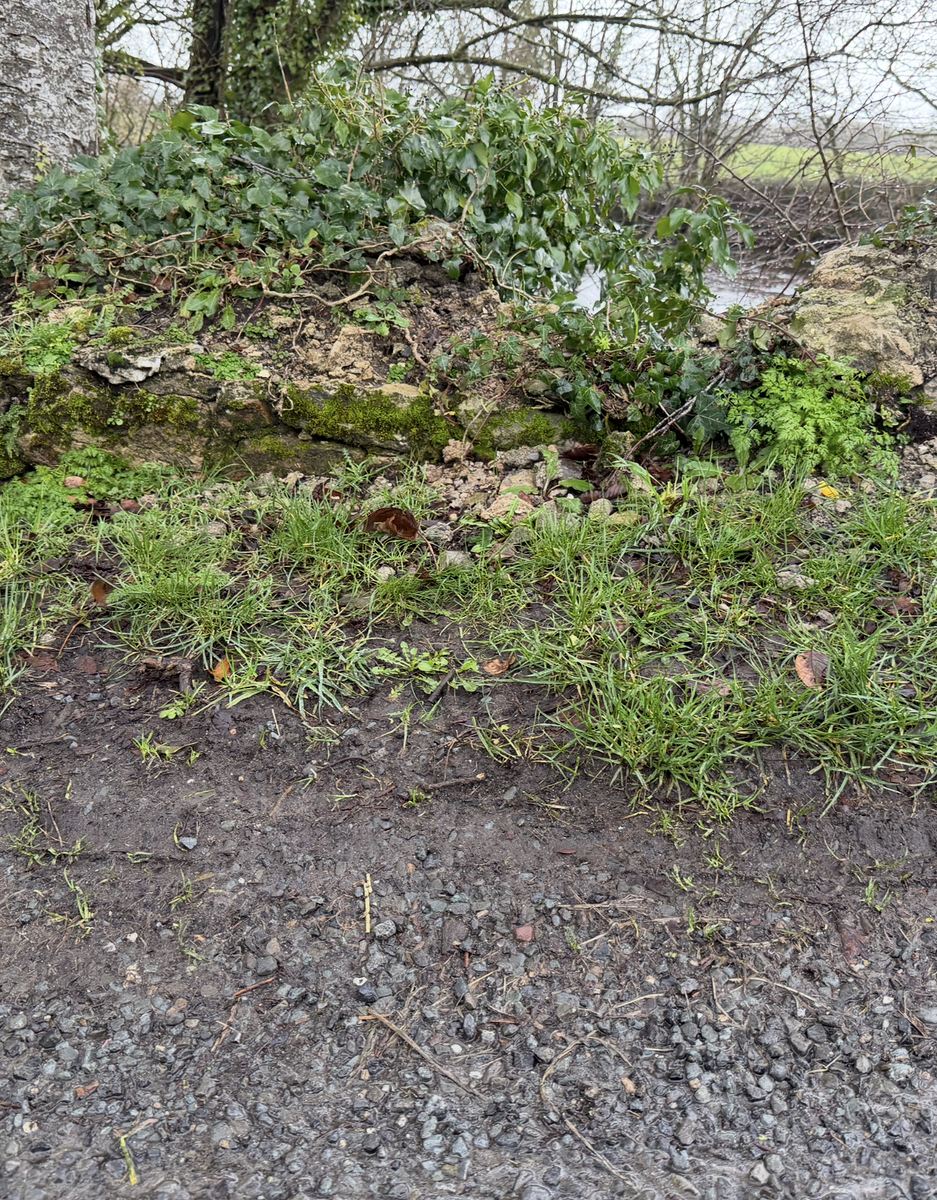
Councillor payments and expenses: follow the figures
Article
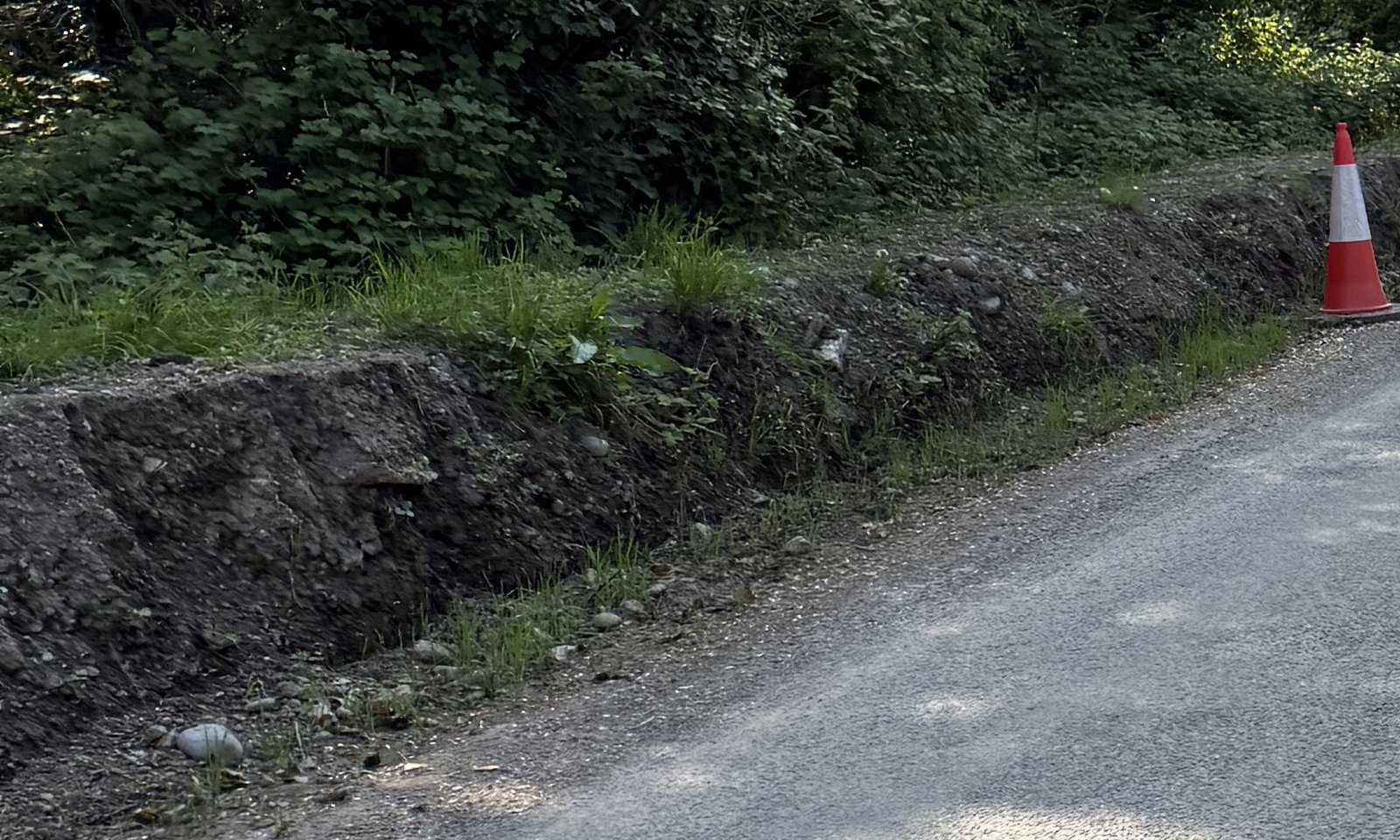
Rain, loose soil and the road edge
Article
Video Explainers
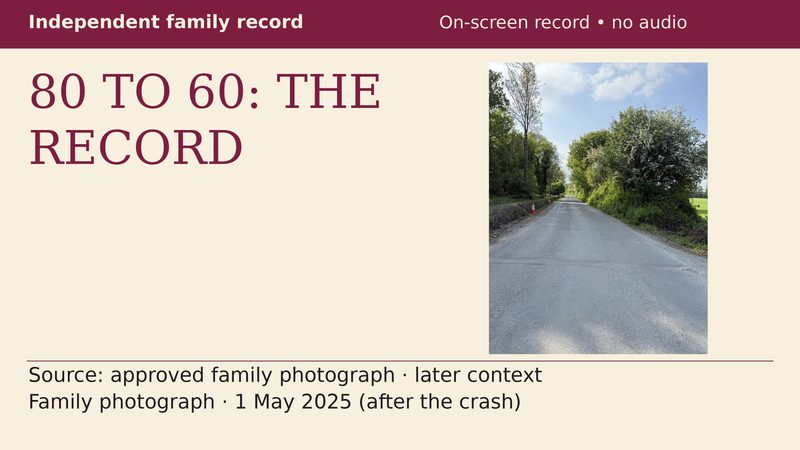
The 80-to-60 motion
Video Explainer
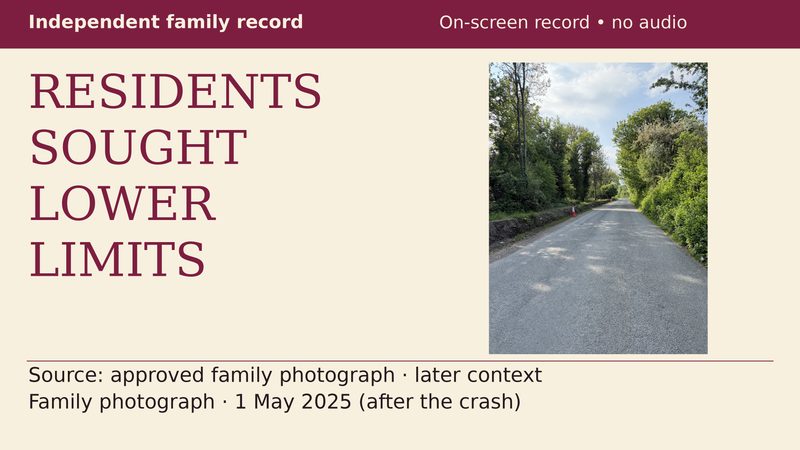
Local requests for lower limits
Video Explainer
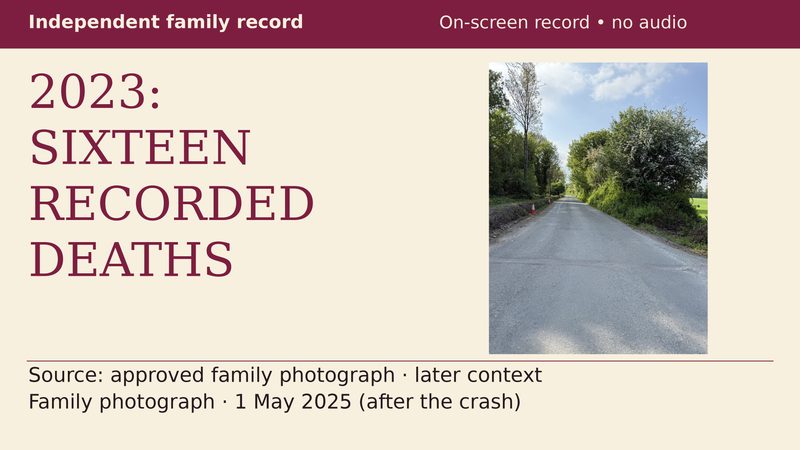
Tipperary’s 2023 county count
Video Explainer
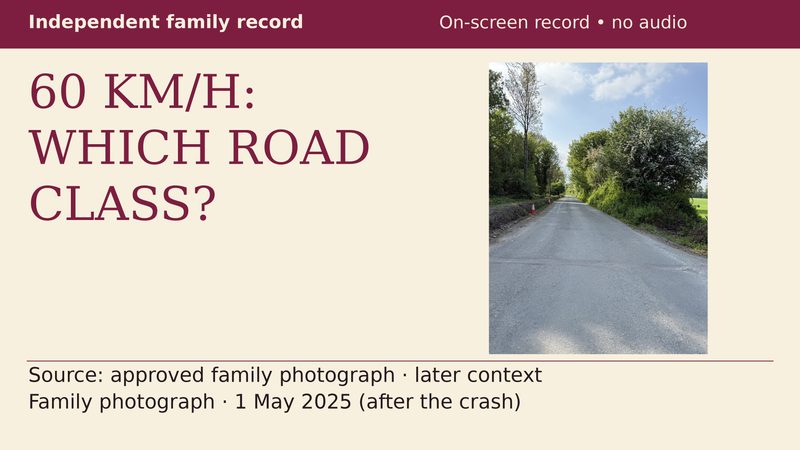
Which roads changed to 60?
Video Explainer
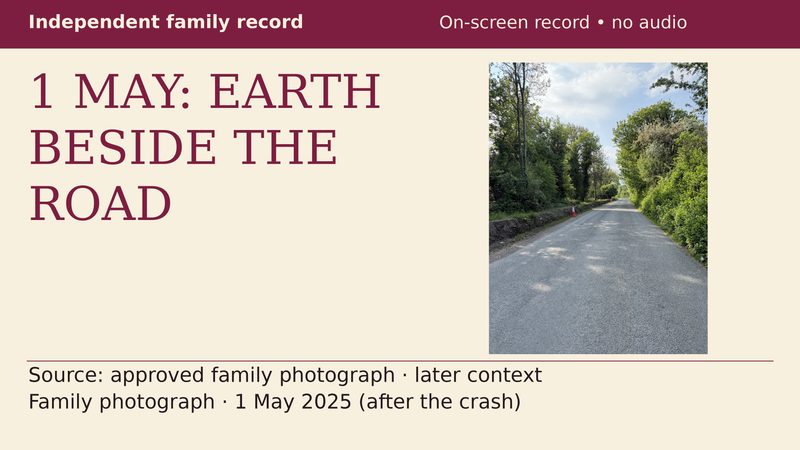
What the 1 May photograph shows
Video Explainer
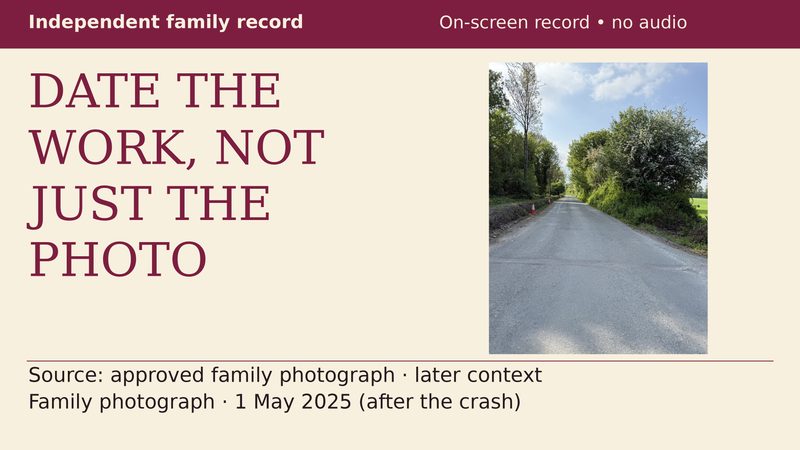
Which documents date the works?
Video Explainer
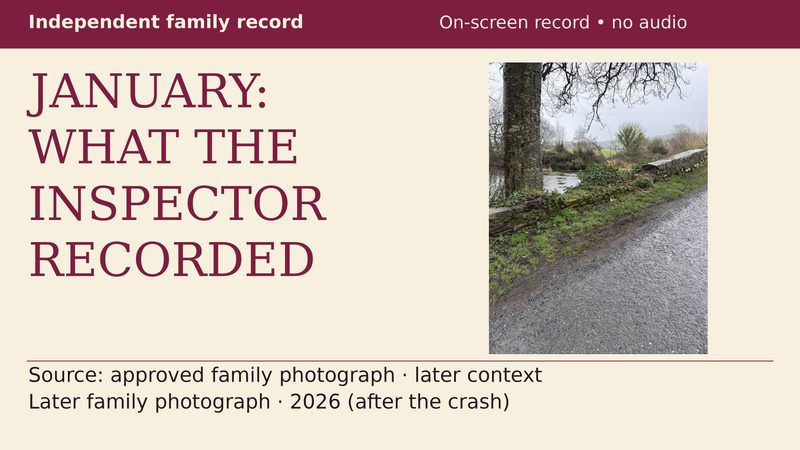
What the January inspector recorded
Video Explainer
From inspection to completion
Video Explainer